

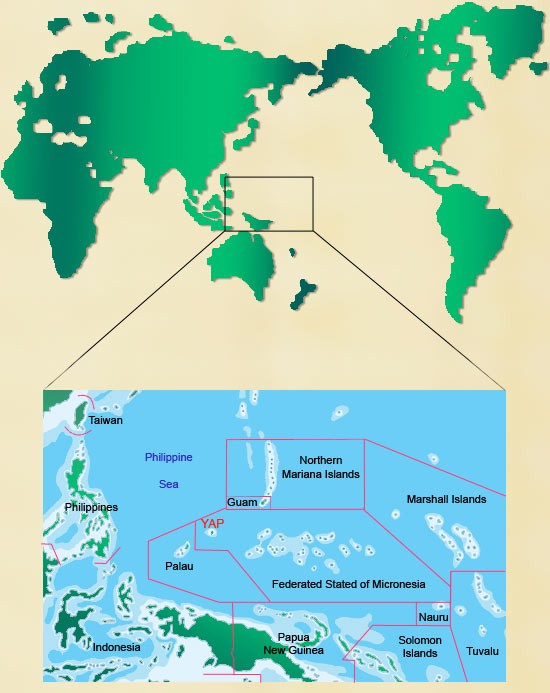
In the vast expanse of the Pacific ocean there lies the beautiful island of Yap. Tropical beauty and a comfortable climate makes Yap a destination for tourists seeking privacy. Visitors to this island are, however, shocked by the fact that the people leave their savings out in the streets. And this is no small money, this is Big money.

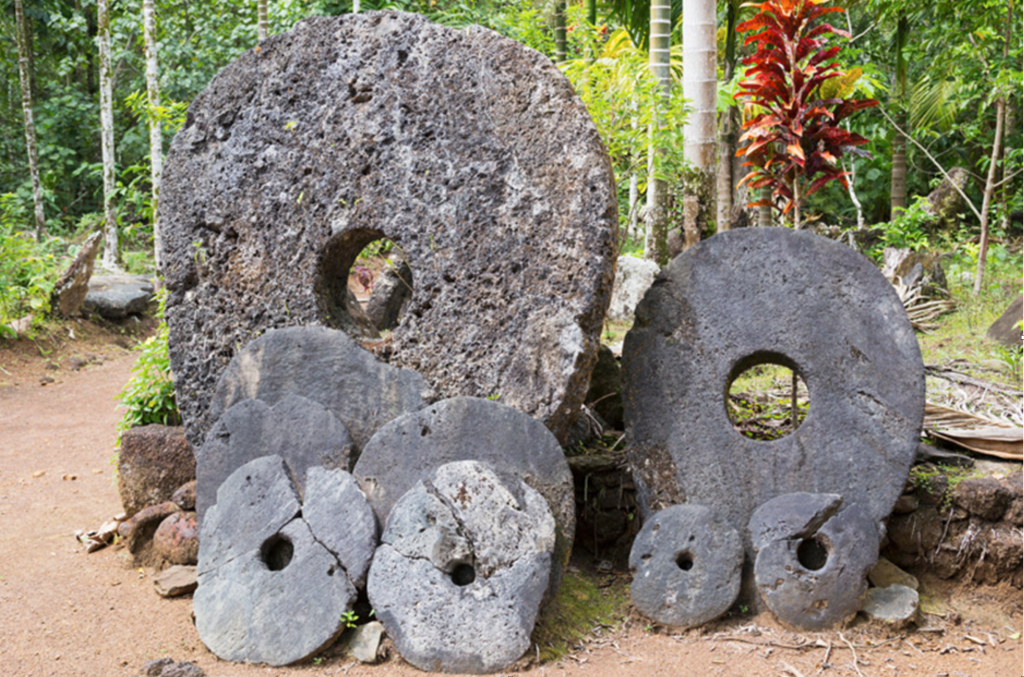
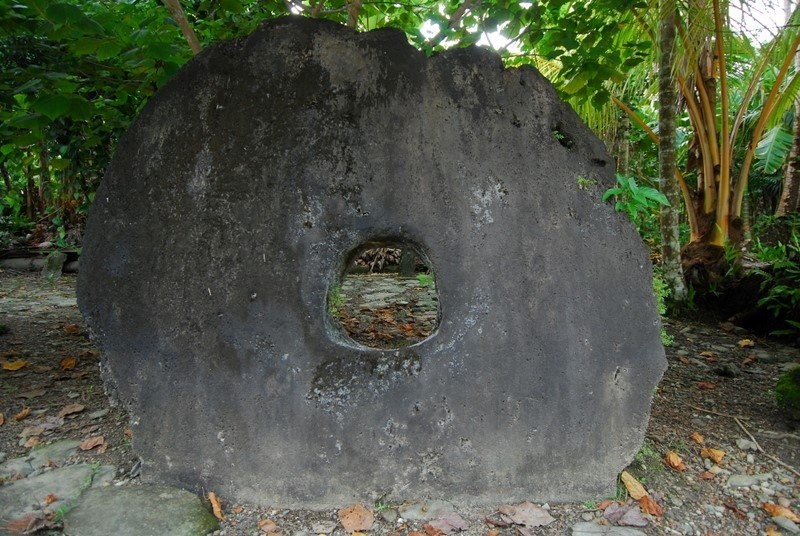
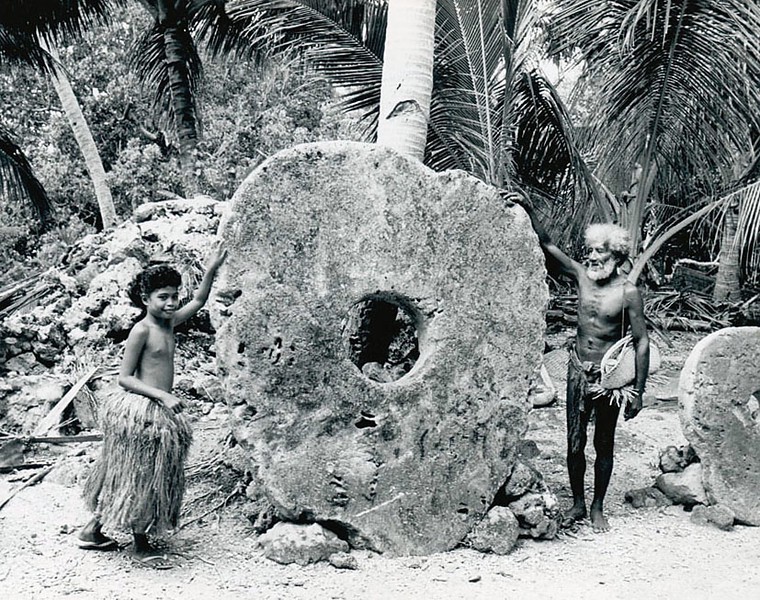
Throughout this island, vast circular stone disks are found in front of buildings and along paths. This stone disks are called rai in the native Yapese language and they are a legal tender in the island. The use of this currency dates back to 500-600 years ago. The actual time remains unknown. Although, some people keep their stone money at home, others use the village ‘banks’. These are banks aren’t like normal banks, there are no security, no tellers and sometimes you may not even find a building. Another surprising fact is that at these banks, the money are kept outside leaning against coconut tress and walls.
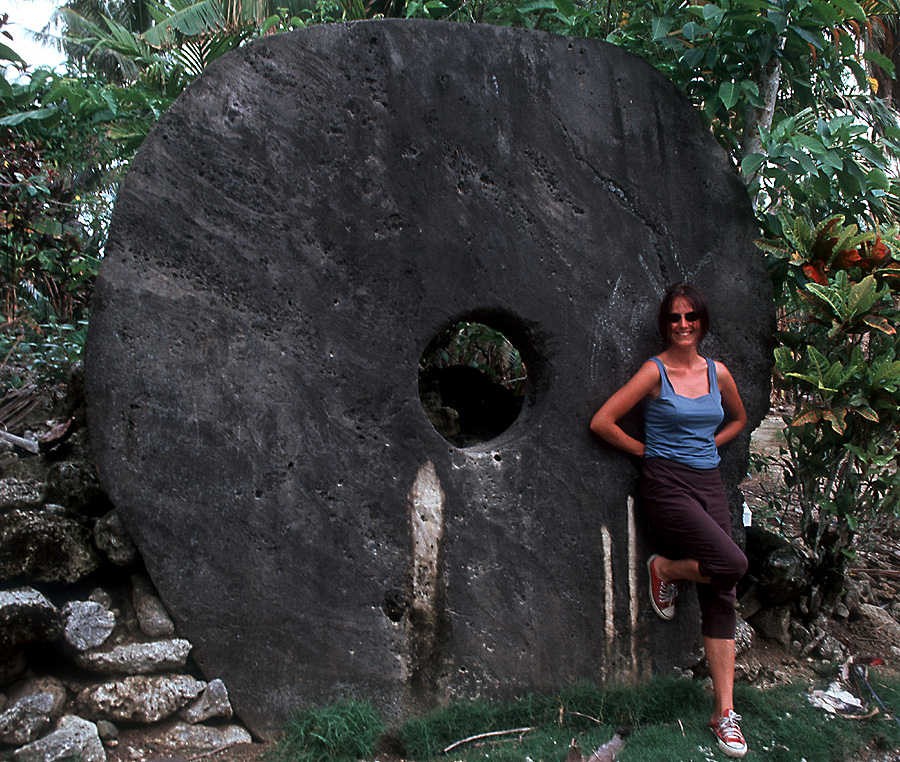
The sizes of this stone disks (money) may vary from from 3.5 centimetres (1.4 in) to 3.6 metres (12 ft), but most are between 30 and 50 centimetres (12 and 20 in). Some can way as much as 5 tons.
HOW DID THIS MONEY COME TO BE?
Legend has it that in the distant past, a group of Yapese voyagers landed on the island of Palau and obtained some beautiful stones. They took them back to Yap, and there the people decided to use them as currency. They began carving the stones into disks the shape of the full moon but with a hole in the middle.
The Yapese were very particular about the material they used. They preferred minerals that we now know as aragonite and calcite. These materials were perfect for the job but they were not found in Yap. So, the Yapese people had to continue making the perilous voyage of some 400 km to Palau to obtain these materials. Using primitive hand tools, they cut slabs of stone from underground caves and carved the slabs into a disk shape. To carve just one piece of money, the hammering and chiseling continued for months and sometimes even years. Holes were cut in the rocks to accommodate stout poles on which the stones could be carried down to the shore. There the newly carved money was loaded onto canoes or bamboo rafts. To transport a large piece, the workers stood it up in the water and then built a large raft around it. With wind in the sails and strong arms on the oars, they then towed the raft carrying the newly carved wealth back to Yap.
The process was a dangerous one and people were injured and killed. Also, not all the stone disks made it back to Yap, this fact is proven by the amount of stone money found on the ocean floor. Mind you, these ones are just as valuable as the rest of the other stones. They are even used in transactions. In one instance, a large rai being transported by canoe and outrigger was accidentally dropped and sank to the sea floor. Although it was never seen again, everyone agreed that the rai must still be there, so it continued to be transacted as any other stone.
HOW MUCH IS IT WORTH?
The value of rai is determined by factors such as it’s size, beauty and the quality of the sculpture. Then you consider its history. How old is it? Was it very difficult to quarry and carve? Were lives endangered or lost when men took it on the voyage to Yap? Finally, what is the social status of those involved in the transaction? Stone money in the hands of a chief has more value than that owned by a commoner.
The stones were and are still used in important social transactions, such as marriage, inheritance, political deals, sign of an alliance, ransom of the battle dead, or, rarely, in exchange for food. Not surprisingly, the stones are rarely moved during transactions and transfer of ownership. The production of these stones ended in 1931 with over 13,000 of stone disks.
Today, the Federated states of Micronesia which Yap is a part of uses the US dollar as their official currency but the rai still remains an integral part of their culture and is still highly regarded.


 Tour the Globe 🌍