

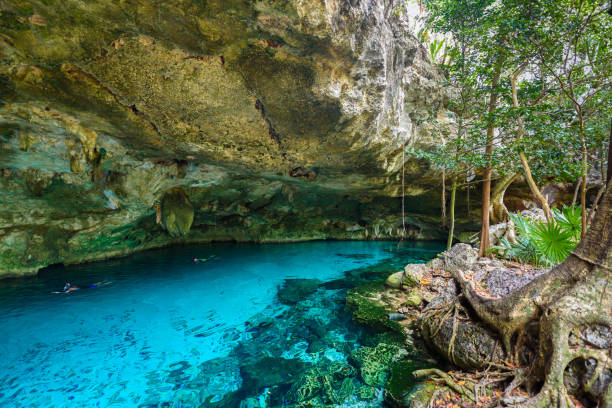
What are Cenotes? Cenotes are natural pits or sink holes resulting from the collapse of limestone bed rock. Swimming in Cenote is a very refreshing experience and an adventure you wouldn’t want to miss. Cenotes are beautiful, magical, refreshing geological formations. Most Cenotes are filled with water that has been filtered by the earth making it super clear and pure. The waters are so pure you can see the fishes in them. Thousands of Cenotes dot the Mexican Yucatan Peninsula. In fact, there are over 30,000 cenotes in Mexico, and over 6000 are in Tulum. There existence is a defining characteristic of the region.
In the ancient times, the Mayans greatly revered cenotes because they were a source of water in dry times. Also, they were considered as door ways to to Xibalbá, the Mayan underworld, so they were sacred places and places of worship. The vessels, gold and jade jewelry that have been found in the depths of cenotes have confirmed this fact. Another Mayan believe was that small beings called Aluxes protect the cenotes (Dz’onot in Mayan) and so you must make a prayer, asking permission to swim in these waters.
Types of Cenotes.
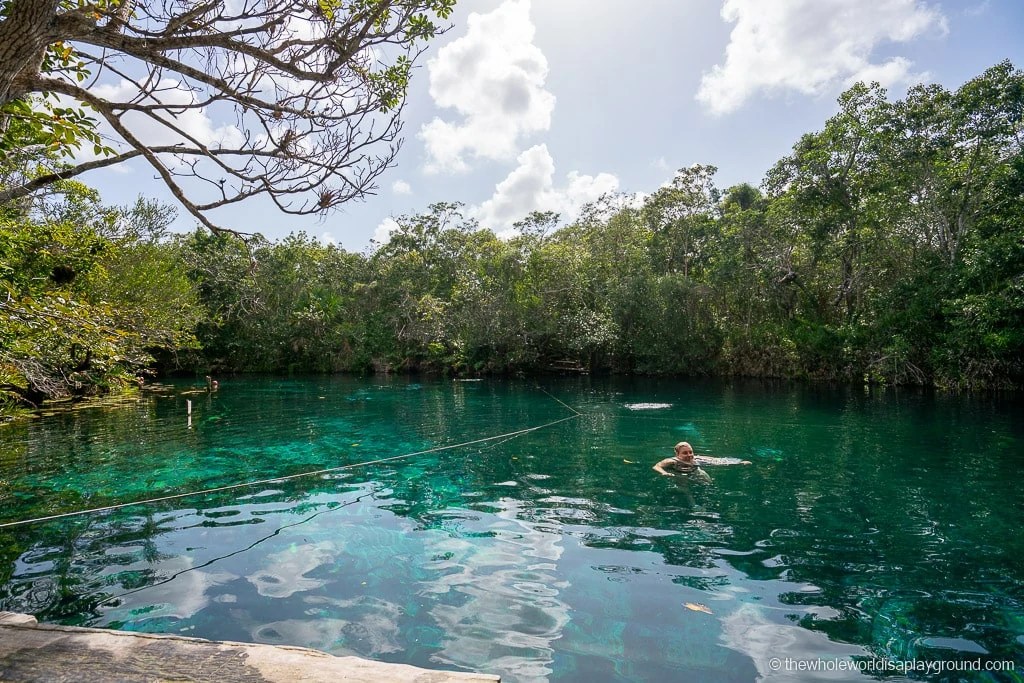
1. Open Cenotes : These are the oldest types of Cenotes. They are caves which have completely collapsed in on themselves and are exposed to the sky. Sometimes they are confused with lagoons. They are a favorite because you can see the blue sky and beautiful fauna around as you swim. Some examples are Cenote Cass Tortuga, Cenote Cristalino, Cenote Car wash and Cenote Zacil Ha.

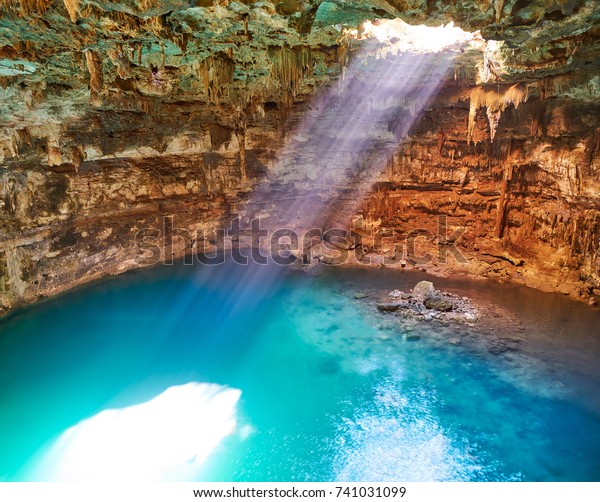
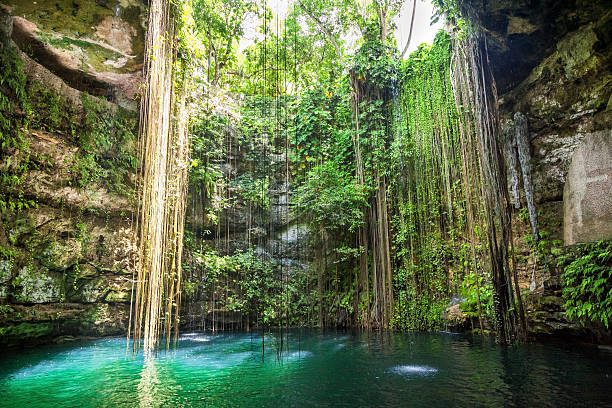
2. Semi-open Cenotes: These type of Cenotes are not as old as open Cenotes. There roof is partially opened, allowing for sunlight to illuminate the waters giving a very beautiful appearance. Examples are Cenote Suytan, Cenote Lorenzo Oxman, Cenote Samula and Cenote Ik Mil.
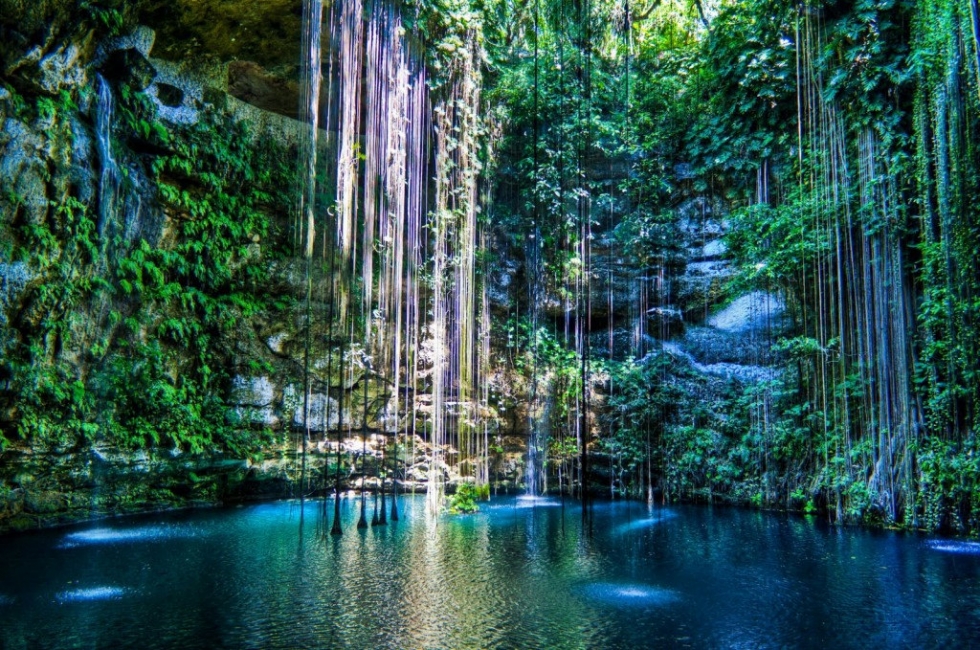
3. Closed Cenotes/Underground Cenotes : These are the youngest type of cenotes. They are completely underground and have no access to light. They are accessed through pathways, caves or tunnels. Stalactites and Stalagmites abound . Some examples are Cenote Dos Ojos, Grand Cenote, Cenote Angelica and more.

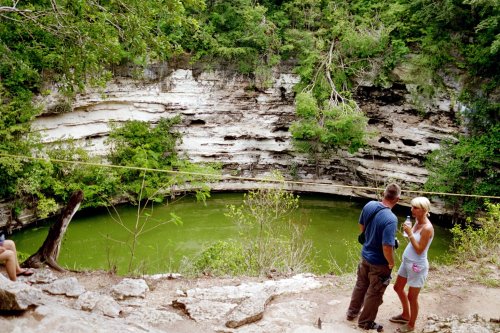
4. Deep Open Cenotes: They are best known and more popular because they are completely open. They are almost the most representative type of cenote, since the Sacred Cenote of Chichen Itza is of this type and is one of the most recognized worldwide.
Cenotes are really beautiful geographical formations. Their beauty and fauna is a marvelous work of nature. Swimming in a cenpte, is a feeling that can’t be given by any swimming pool. Cenotes are not found in Mexico alone. They are found in Australia, Belize, Canada, USA, Dominica Republic and Zimbabwe. If you live close to a cenote, why not visit one. If you don’t live close to one, why not make it the destination of your next vacation? I assure you, you will enjoy the experience. But we have to make efforts to conserve Cenotes, so, as a precaution, don’t rub sunscreen of any form when you are about to swim in a Cenote so you don’t destroy its fragile ecosystem. Let’s conserve Cenotes so we can enjoy this beautiful work of nature forever.


 Tour the Globe 🌍
So beautiful! Never knew that’s what they are called
LikeLiked by 1 person
Yeah, me too.
LikeLiked by 2 people